
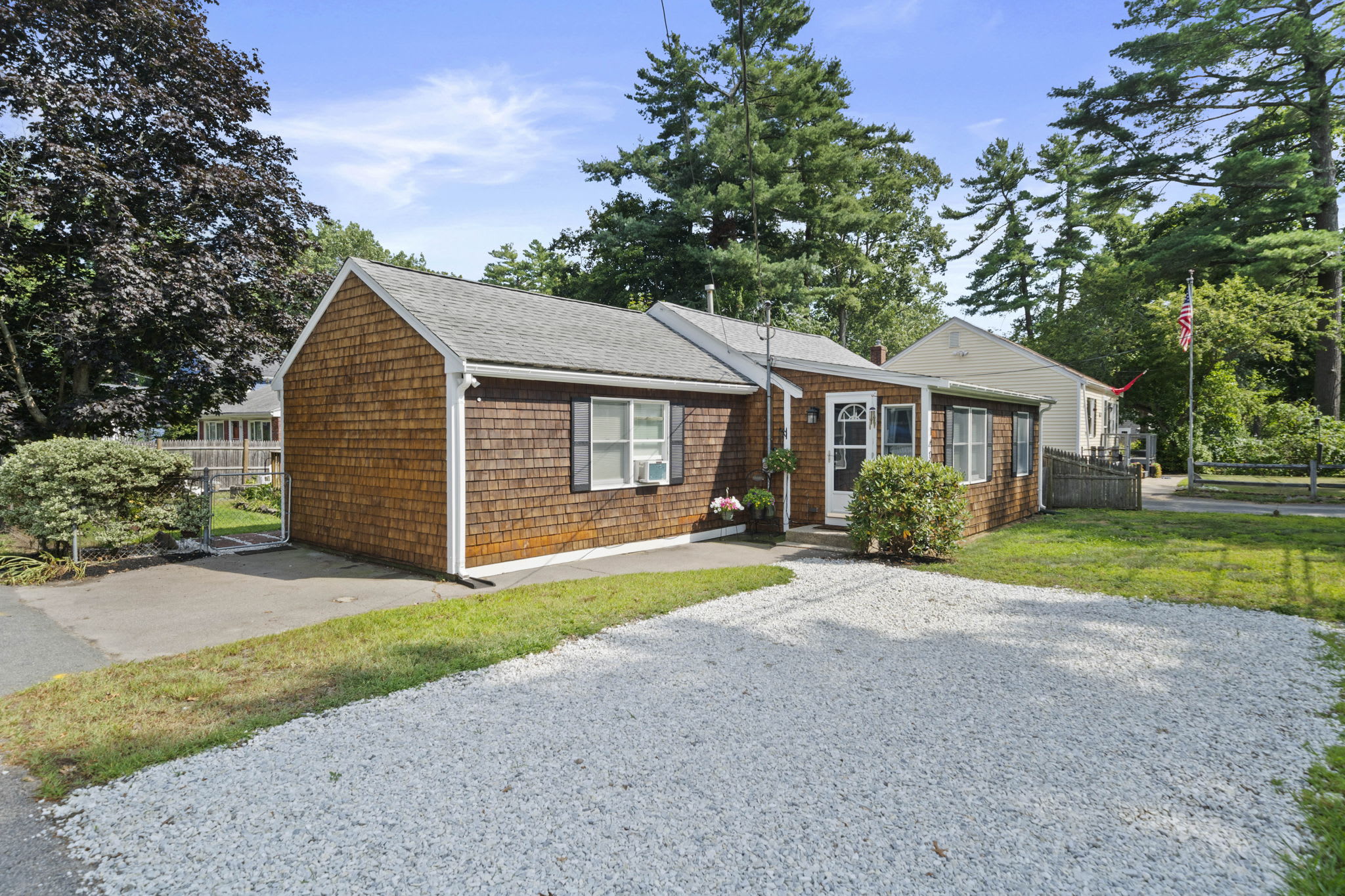
Every hour and every dollar a seller puts into prep work before listing comes back multiplied at the closing table. I've watched two nearly identical homes on the same street sell $30,000–$50,000 apart — and the difference wasn't the house. It was the prep. Here's the exact sequence, in order, so your effort goes where it pays off most.
Step 1: Get a Pre-Listing Walkthrough Before You Touch Anything
This step alone can save or make you thousands, because it stops you from spending money in the wrong places. I look at your home the way a buyer will, and the way an inspector will, and tell you which of the steps below actually move the needle for your price point and neighborhood. A $450,000 Cape in Halifax and a $1.2M colonial in Duxbury don't have the same "must-do" list — spending on the wrong one is money buyers never see or credit you for.
Step 2: Handle the Big-Ticket Items First — Before a Buyer's Inspector Finds Them
This is where the real money is won or lost. Fix these on your terms, not during a 10-day inspection window when a buyer's attorney is writing the credit request.
-
Roof – A buyer's inspector flagging a 20+ year roof often triggers a $10,000–$15,000 price reduction request. Address it upfront and you keep that money.
-
Furnace/boiler and water heater – Undisclosed age or poor service history gives buyers leverage to negotiate down. Records in hand remove the leverage.
-
Foundation and moisture issues – A damp basement discovered mid-contract can cost you 2–3x what fixing it would've cost before listing, because now it's urgent and you have no negotiating room.
-
Septic systems – A failed Title 5 found during a buyer's inspection can cost $15,000–$25,000+ to replace, and you'll be doing it under deadline pressure at a worse price. Get ahead of it and you control the cost and the timeline.
-
Electrical panel – Older knob-and-tube or fuse panels can spook buyers' lenders entirely, shrinking your buyer pool and your top offer.
The math: every one of these items, fixed proactively, either avoids a five-figure buyer credit or keeps a nervous buyer from walking. That's real money, not curb appeal fluff.
Step 3: Declutter Like You're Already Moving
This step costs you a weekend and maybe a storage unit rental — and it's one of the highest-return moves on this list. Overstuffed closets and packed garages make rooms and storage read as smaller than they are, and buyers price smaller. Appraisers and buyers alike respond to how spacious a home feels, and that feeling shows up in offer numbers.
-
Clear closets to about 50% capacity.
-
Box up off-season items, extra furniture, and personal collections.
-
Clear kitchen counters down to a handful of items.
-
Rent a storage unit or POD if needed — a $150/month rental that helps you net thousands more pays for itself many times over.
Step 4: Depersonalize the Space
Family photos and personal memorabilia keep buyers thinking about your life instead of picturing their own — and buyers don't pay top dollar for a house they can't mentally move into. This step costs you a few boxes and an afternoon.
Step 5: Deep Clean — Every Room, No Exceptions
Dollar for dollar, this is the best return on this entire list. A few hundred dollars for a professional deep clean routinely returns multiples of that in perceived value — buyers equate spotless with well-maintained, and well-maintained homes get stronger offers with fewer "what else is wrong with this place" doubts. Grout, windows, baseboards, light fixtures, ceiling fans — all of it registers, even if buyers can't articulate why they liked the house.
Step 6: Small Repairs That Punch Above Their Weight
Individually cheap, collectively worth thousands in perceived quality:
-
Patch nail holes and touch up scuffed paint (neutral tones only)
-
Fix sticking doors, loose cabinet hardware, and squeaky hinges
-
Replace burnt-out bulbs with consistent color temperature throughout
-
Caulk tubs, showers, and sinks
-
Pressure-wash siding, walkways, and the driveway
None of these show up as a specific line item on an appraisal — but together they're the difference between a buyer thinking "move-in ready" and a buyer mentally subtracting money for "stuff I'll need to fix."
Step 7: Curb Appeal — Your Highest ROI Dollar-for-Dollar
Buyers form a price opinion before they get out of the car. National studies consistently show a well-maintained front entry and landscaping returns more per dollar spent than almost any other pre-sale investment — often 100%+ of the cost back, sometimes more, purely through stronger first impressions and offers.
-
Fresh mulch and trimmed shrubs
-
A clean, updated front door — one of the single best ROI upgrades available, often costing a few hundred dollars and returning far more in perceived value
-
Lawn care (critical for Duxbury and Kingston listings where outdoor space is part of the sale)
-
Clear gutters and pressure-washed exteriors
Step 8: Stage With Intent, Not Just Furniture
Staged homes consistently sell faster and closer to (or above) asking price than vacant or poorly arranged ones, because buyers are paying for a feeling as much as square footage. Every room needs an obvious purpose — that awkward space that's been a catch-all for ten years becomes a home office or reading nook, and buyers pay for square footage they can picture themselves using.
The Timeline That Turns Effort Into Equity
|
Weeks Before Listing |
Focus |
Why It Pays |
|---|---|---|
|
6–8 weeks out |
Pre-listing walkthrough, big-ticket repairs, septic/Title 5 if needed |
Avoids five-figure buyer credits and control over cost |
|
4–5 weeks out |
Declutter, depersonalize, minor repairs |
Rooms feel bigger, buyers picture themselves living there |
|
2–3 weeks out |
Deep clean, curb appeal, landscaping |
Best dollar-for-dollar return on this entire list |
|
Final week |
Staging, professional photos, final walkthrough |
Converts prep work into stronger offers, faster |
Bottom Line
The homes that sell fastest and for the strongest price on the South Shore aren't the most expensive ones — they're the ones where the seller put in deliberate, ordered effort before listing. Every step above either protects money you'd otherwise lose to negotiation, or adds perceived value that shows up directly in offers. It's not about spending more. It's about spending right, and in the right order.
If you're thinking about selling in Duxbury, Kingston, Pembroke, Halifax, or Plymouth and want to know exactly which of these steps will make you the most money on your specific home, I'll walk it with you — no cost, no obligation.
Sean Donovan, REALTOR® The FIRM Real Estate Group 617-797-9456 | SeanDonovanRealEstate@gmail.com | seandonovanrealtor.com